investing
GOOG vs GOOGL: The Actual Difference Between Alphabet's Two Tickers (and Which to Buy)
Independently checkedNo paid placement4 sources citedHow we rate
Disclosure: Some links below are affiliate links — if you open an account through one, we may earn a commission at no extra cost to you. It never affects what we recommend. This page is information, not investment advice, and stocks can lose value — capital at risk. How we rate providers.
The short answer: GOOGL and GOOG are the same company — Alphabet — split across two tickers. GOOGL is Class A stock with one vote per share; GOOG is Class C stock with no votes. Same business, same profits, same $0.22 quarterly dividend, prices within a fraction of a percent of each other. The only real difference is the vote — and because the founders control a majority of all votes anyway, that difference is close to cosmetic for a retail investor.
Every number below was verified on 16 July 2026 against Alphabet’s SEC filings and market data — sources linked as we go.
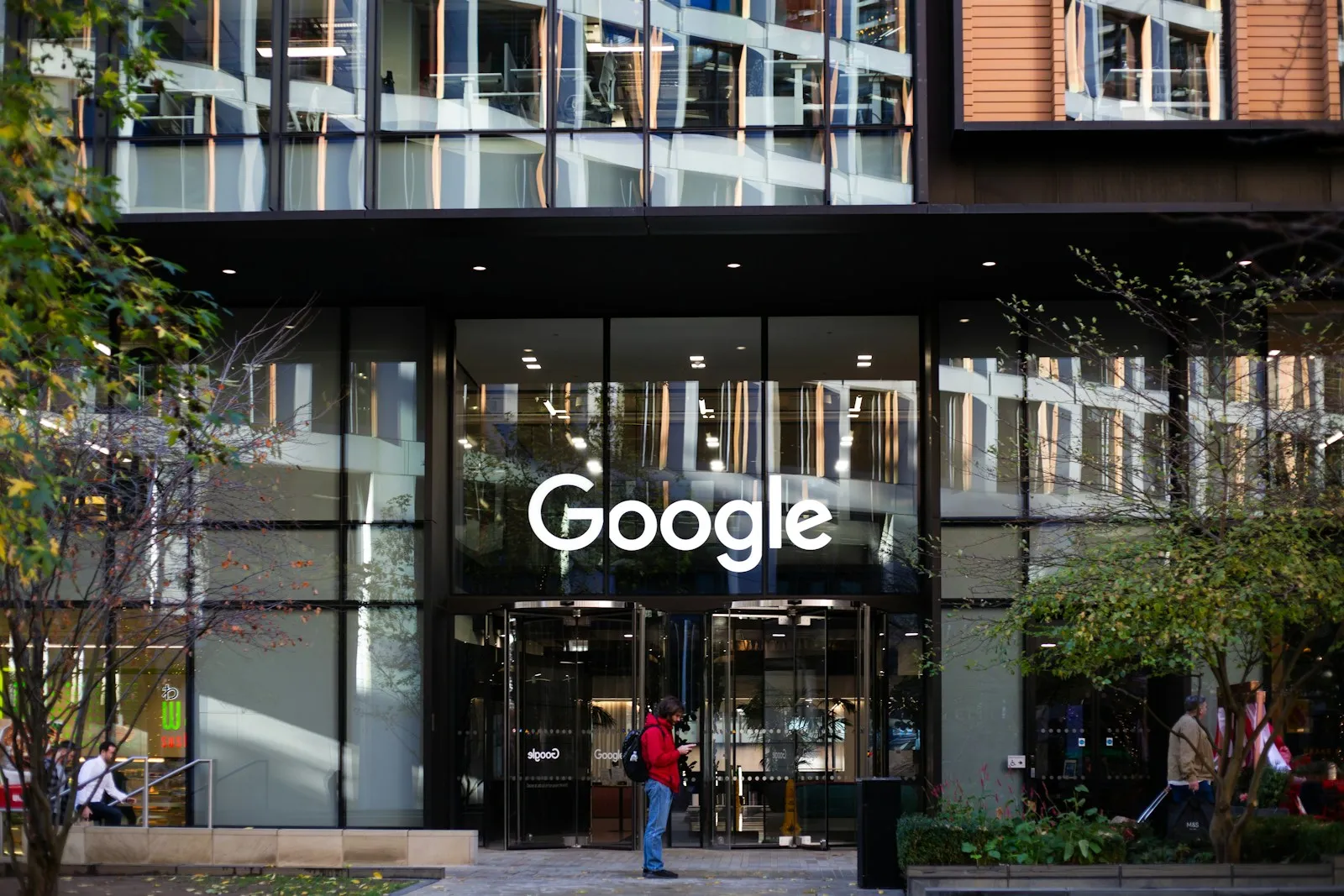 Google’s London office. One company — two tickers on the Nasdaq. Photo: Karollyne Videira Hubert / Unsplash.
The two tickers side by side
| GOOGL | GOOG | |
|---|---|---|
| Share class | Class A | Class C |
| Voting rights | 1 vote per share | None |
| Price (15 Jul 2026 close) | $370.92 | $370.21 |
| Quarterly dividend | $0.22 | $0.22 |
| Listed on | Nasdaq | Nasdaq |
| In the S&P 500 | Yes | Yes |
| Created | Google’s 2004 IPO | April 2014 split |
There is also a Class B share you can’t buy: unlisted stock carrying 10 votes per share, held almost entirely by the founders and early insiders. It’s the reason the A/C distinction matters less than it looks — more below.
Why Alphabet has two tickers at all
In April 2014, Google executed an unusual stock split: every Class A shareholder received one new Class C share per share held. The C shares took the original ticker, GOOG; the voting A shares moved to GOOGL. The point wasn’t shareholder value — it was control. Google could keep issuing stock to employees and for acquisitions using non-voting C shares, without eroding the founders’ voting majority held in Class B.
The split came with a built-in acknowledgment that non-voting shares might be worth less: a court-approved settlement mechanism compensated Class C holders (roughly half a billion dollars’ worth in 2015) when the two prices initially diverged. Since then, the market has priced the vote at almost nothing — the gap between GOOGL and GOOG has generally stayed within a fraction of a percent, flipping direction from time to time. At yesterday’s close it was about 0.19%, with the voting share on top ($370.92 vs $370.21).
Both classes went through the 20-for-1 split in July 2022, which is why the prices look modest relative to Alphabet’s size.
The vote you’d be buying is (almost) symbolic
Here’s the number that settles most of the GOOG-vs-GOOGL debate. Per Alphabet’s 2026 proxy statement, as of April 2026 Larry Page and Sergey Brin beneficially owned about 89% of the Class B stock — roughly 52.7% of Alphabet’s total voting power (Page ~27.4%, Brin ~25.3%).
A majority is a majority: no combination of A-share votes outvotes the founders on anything they agree on. Shareholder proposals asking to equalize voting rights have been filed — and voted down — year after year, for exactly this reason. If you’re buying GOOGL for the vote, know what the vote can actually do: register a preference, not change an outcome.
That’s not an argument against GOOGL. It’s an argument that the choice barely matters, which is itself useful information when the internet insists on a debate.
Dividends, buybacks and index funds treat them the same
- Dividends: Alphabet started paying dividends in 2024 and has raised them since — the board declared $0.22 per share for Q2 2026, a 5% increase, paid identically on Class A, B and C (SEC 8-K).
- Buybacks: Alphabet’s repurchase program buys back stock in both listed classes; buybacks shrink the share count and support both prices without preferring either ticker.
- Indexes: the S&P 500 carries both GOOGL and GOOG (it’s one of the reasons the index lists 503 tickers for 500 companies). If you own an S&P 500 or total-market fund, you already own both and this whole question is settled for you.
So which one should you buy?
The honest framework, in order:
- You want the theoretical governance right, or you just prefer owning the “full” share: buy GOOGL. Cost of that preference at yesterday’s close: about 0.2%.
- You want maximum value per dollar and nothing else: check both quotes at the moment you buy and take the cheaper one — historically that has often been GOOG, though the gap flips. On a $1,000 purchase, a 0.2% difference is $2; don’t overthink it.
- You hold index funds: do nothing. You own both at market weights already.
There is no scenario where the choice between the two tickers meaningfully changes your return. Alphabet’s business performance will decide that; the share class won’t.
Buying GOOG or GOOGL from outside the US — what actually costs you money
Most guides to this question are written for Americans. If you’re an expat, freelancer or investor outside the US — our usual reader — three things matter more than the A-vs-C debate:
1. File the W-8BEN before the dividend hits. Now that Alphabet pays dividends, withholding is real money: the US takes 30% of dividends by default from non-resident investors, typically reduced to 15% under most tax treaties (UK, Switzerland, Germany and most of the EU included) once your broker has a valid W-8BEN on file. Reputable international brokers collect it at signup — if yours didn’t, ask why.
2. The FX conversion is often your biggest fee. Buying a USD stock from a EUR, GBP or CHF account means converting currency, and brokers’ conversion margins vary from ~0.1% to well over 1% — frequently more than the commission and more than the entire GOOG/GOOGL price gap. It’s the same fee mechanics we track for getting paid across borders; run your amount through our true-cost calculator to see what a conversion really costs, and the statistics page for the market-wide numbers.
3. Large single-stock positions have a US estate-tax wrinkle. Non-residents holding more than $60,000 of US-situs assets can fall under US estate tax rules unless a treaty intervenes (IRS overview). For a diversified portfolio via an Irish-domiciled ETF this usually doesn’t bite; for a big direct Alphabet position it can. Not tax advice — if six figures of GOOG is in your plan, spend an hour with a cross-border tax adviser first.
If you don’t have a broker yet, eToro offers commission-free US stocks (including fractional shares) to investors in most European countries — your capital is at risk, and FX conversion fees apply on non-USD deposits, so check their current fee page against the calculator above before funding.
Bottom line
GOOGL gives you a vote that can’t change outcomes; GOOG gives you the same company about 0.2% cheaper (as of this week — the gap moves). Same dividend, same index membership, same business. Pick either, or let your index fund pick both — and if you’re buying from outside the US, put your attention where the real costs are: the W-8BEN, and the currency conversion.
Prices are the 15 July 2026 Nasdaq close; dividend and voting figures are from Alphabet’s 2026 SEC filings, linked above. Nothing here is investment, tax, or legal advice.